The International Baccalaureate Diploma Programme (IBDP) is a globally-renowned academic course designed for students aged 16 to 18.
At our IB school in Switzerland, the IBDP is a very challenging but rewarding educational journey that forms inquiring, knowledgeable and caring young people who are motivated to succeed in our rapidly changing 21st-century society.
The International Baccalaureate Diploma Programme (IBDP) is a globally-renowned academic course designed for students aged 16 to 18.
It is a very challenging but rewarding educational journey that forms inquiring, knowledgeable and caring young people, who are motivated to succeed in our rapidly-changing 21st century society.
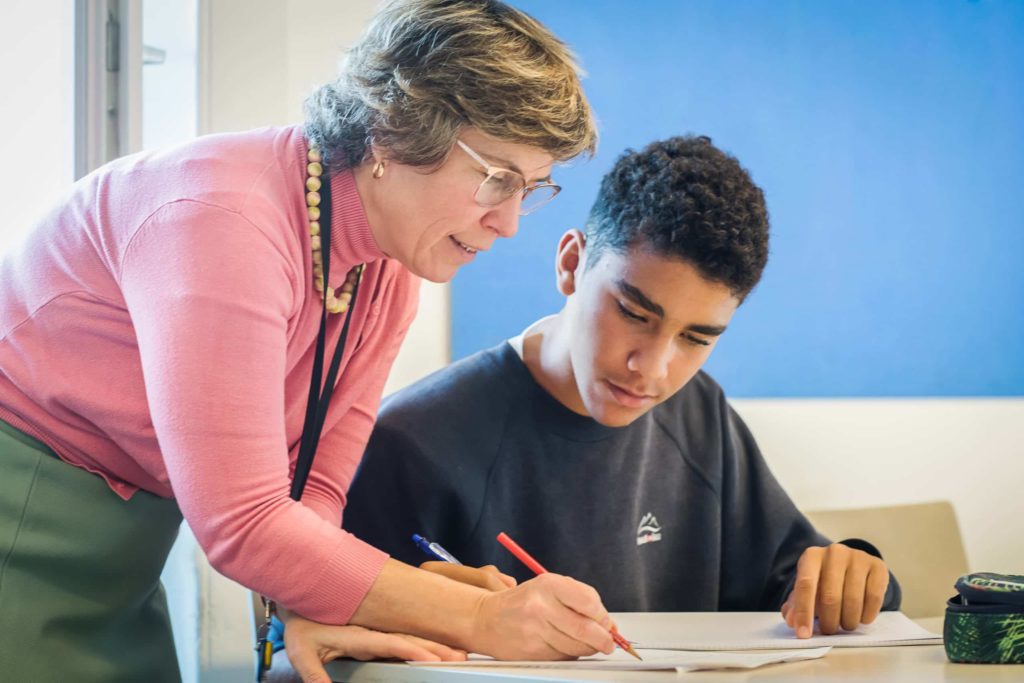
Widely regarded as the gold standard of high school education, the IB Diploma Programme challenges students academically, builds character and opens doors worldwide. At Haut-Lac, that means:
One question comes up in nearly every admissions meeting. Will the IB Diploma open the right doors? The answer is yes, and it has been designed to do exactly that since the programme was founded in Geneva in the 1960s. Every year, the IB sends student transcripts to more than 4,500 universities in over 110 countries.
Swiss families often ask whether IB studies put their child at a disadvantage next to a Maturité. They don’t. Swiss universities recognise the IB Diploma as a valid upper-secondary school-leaving certificate for Bachelor’s admission, with conditions published each year by swissuniversities. Those conditions are about points and subject spread, which is precisely what our Higher Education Guidance team plans for when students choose their six subjects in IB1.
| Where | Is the IB Diploma accepted? | Typical requirement |
|---|---|---|
| Switzerlandincl. EPFL & ETH Zurich | Yes, by every Swiss university | 32/42 points, 3 HL subjects Visual Arts & Film not considered by Swiss universitiesEPFL & ETH Zurich: 38/42, HL maths required |
| United Kingdom | Yes, listed on the UCAS Tariff | 30-40 points plus named Higher Level grades |
| United States | Yes, and often rewarded | University credit at 800+ institutions alongside essays and references |
| Germany | Yes, as an official entrance qualification | A set subject combination including two languages |
| Everywhere else | Yes, in Europe, Asia, Australia and the Americas | 4,500+ universities in 110+ countries varies by course |
Requirements are reviewed annually and vary by course. Sources: swissuniversities, UCAS, IB, DAAD. Correct for 2026/27.
At our International Baccalaureate school, IBDP students develop a good working knowledge of Haut-Lac’s two working languages through level-appropriate English and French lessons and daily interactions with local Swiss and international peers.
They can, however, choose to boost their learning in one or both languages by studying additional subjects in English and/or French to obtain an Advanced Bilingual, a Bilingual, an English or a French IB diploma.
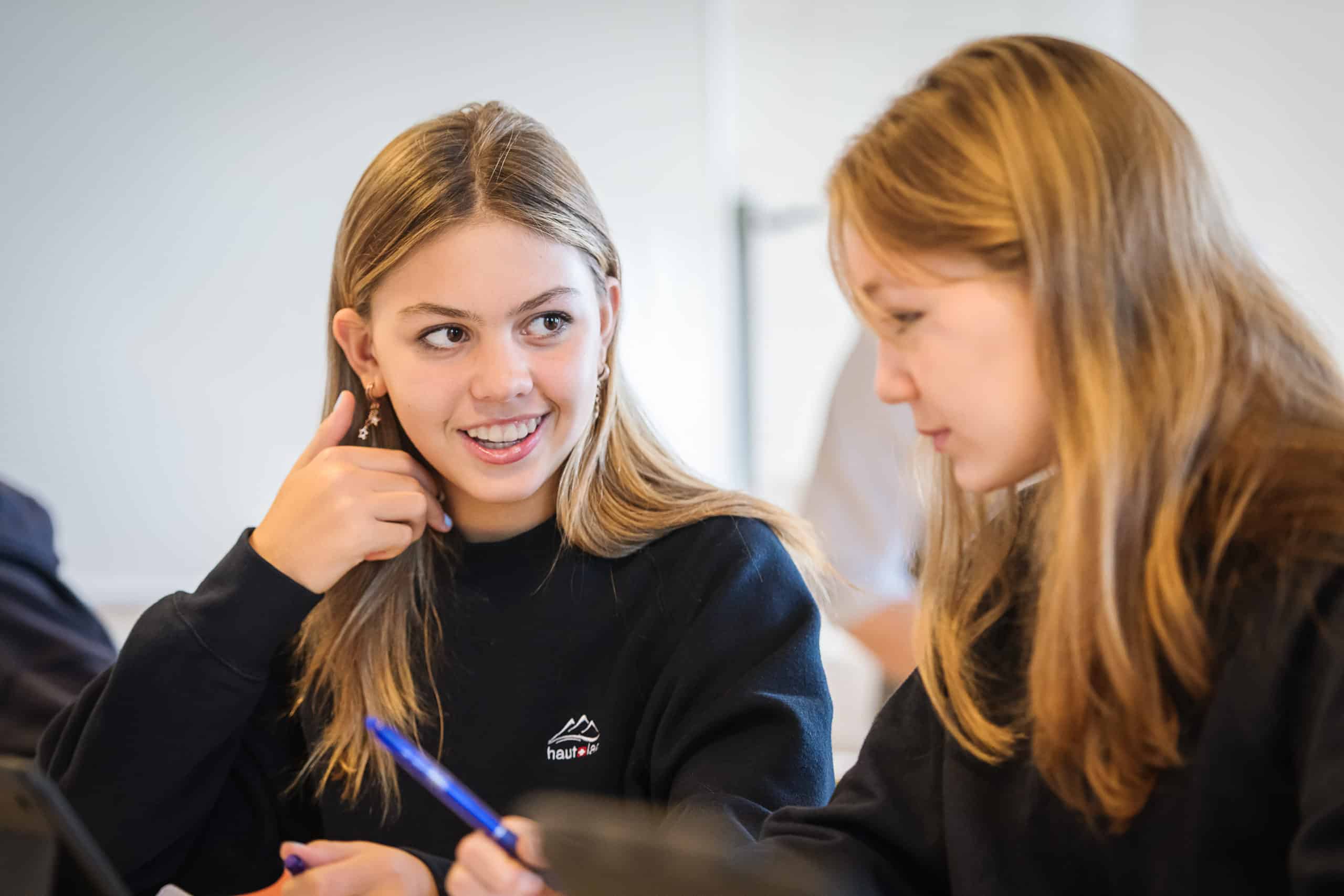
Students at our IB school in Switzerland discuss their learning needs and goals with our Higher Education Guidance team before selecting the diploma option that best suits their desired university studies and abilities.
Set up in the 1960s as the “Gold Standard” in Education, the IB Diploma Programme broadens and deepens student knowledge and skills in two languages, in the humanities, in mathematics, in science, and in the arts.
Our secondary academic team works closely with each student to select their 6 subjects from up to 30 options so they can follow a programme that matches their personal skills and university ambitions.
Below is a list of the current IBDP subjects available at higher and standard levels at Haut-Lac. They are spread over 7 teaching blocks to provide students with as many combinations as possible.
Recognised as one of the best IB schools in Switzerland, Haut-Lac takes a hands-on approach to curriculum planning. Our IB Coordinator, University Guidance Counsellor and teachers work closely with students and their parents to map out a programme that fits, challenges and prepares each one for what comes next
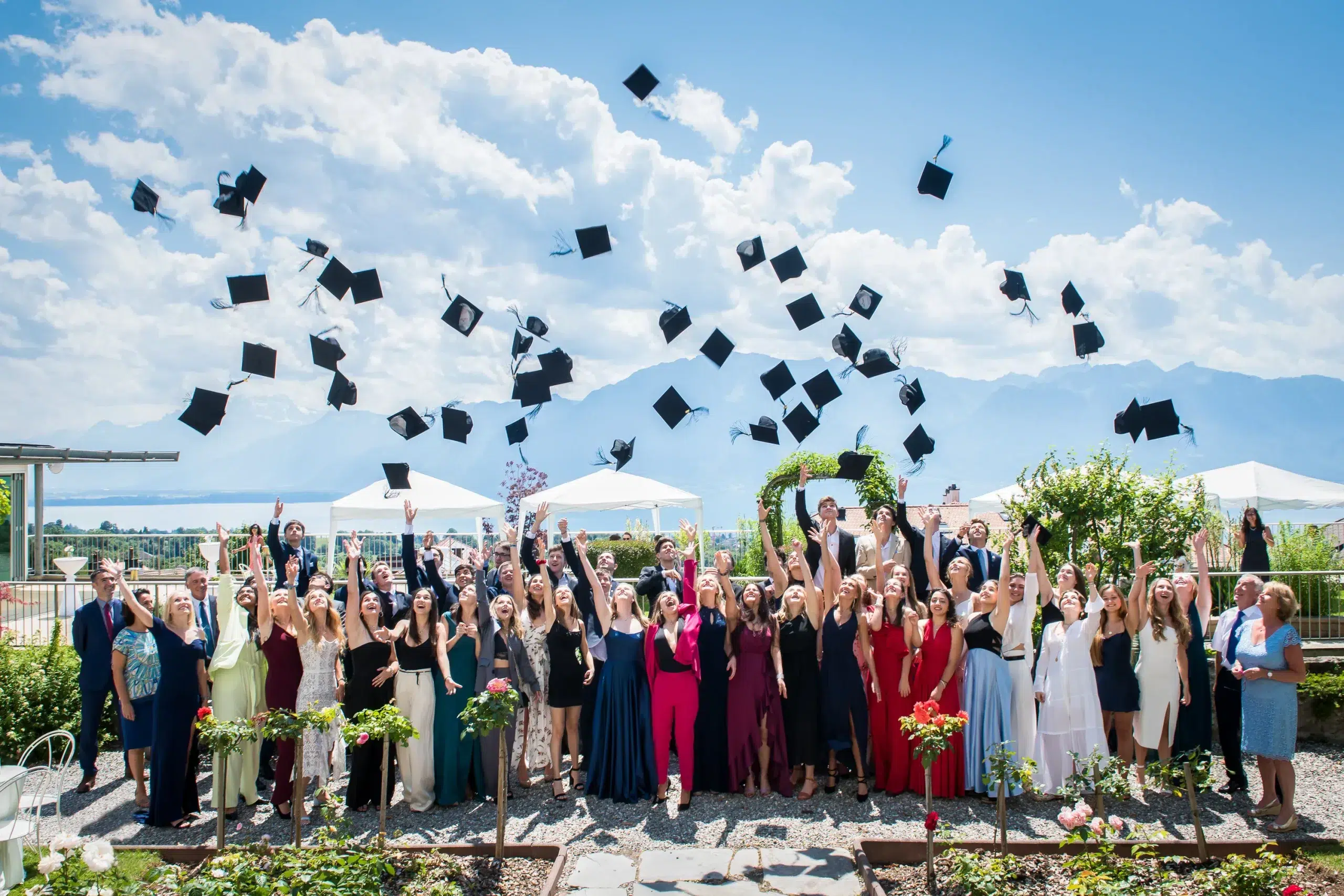
Our 600+ graduates are consistently committed to reaching their goals.
Spread across the globe, they can be found studying at the EPFL in Switzerland, working as an ACCA accountant for Duff & Phelps in the UK, starting successful businesses in Paris, heading up design teams in the Netherlands, contributing to science at MIT and the University of Lausanne, and more.

Hesitating between the IBDP at Haut-Lac and a Swiss state high school diploma?
Check out the Haut-Lac blog for academic programme comparisons, student event reports, interviews with our Head of Secondary, and more.
Consult our FAQs for more on how to choose the best Swiss IB school for your child, the IB programmes at Haut-Lac International School in Switzerland, and how to apply.
Can’t find your answer? Our team is happy to help and provide you with more details.
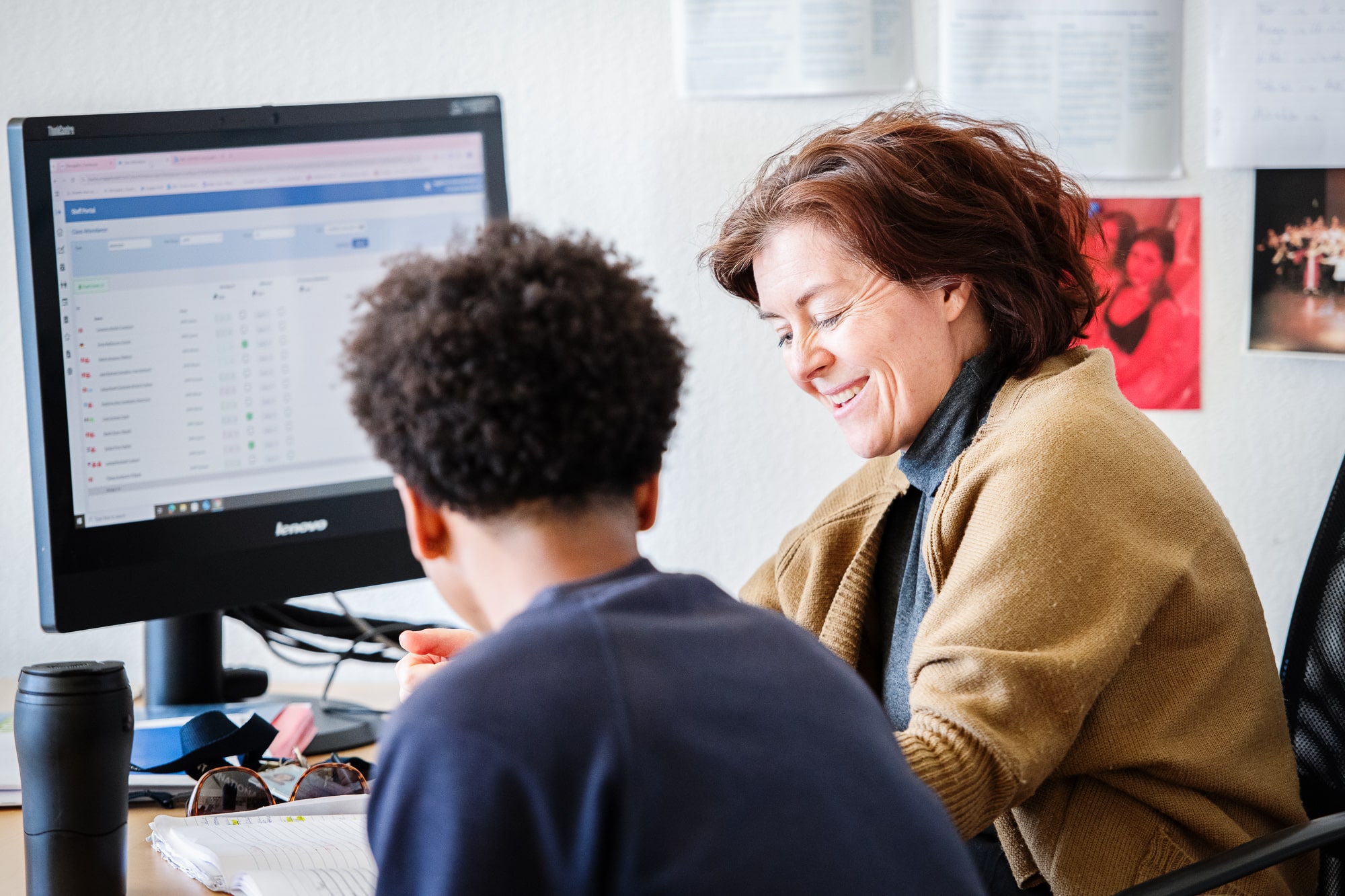
An IB programme school follows a globally recognised curriculum that challenges students academically and develops them personally.
The focus is on key life skills like critical thinking, inquiry, communication and intercultural understanding
Yes, the IB Diploma is fully recognised by all Swiss universities, including EPFL and ETH Zurich.
Swiss universities consider the IBDP equivalent to the Swiss Maturité for admission purposes. However, specific entry requirements vary by university and programme, so it’s worth checking individual course prerequisites.
EPFL and ETH Zurich typically require strong grades in relevant Higher Level subjects, particularly in mathematics and sciences. The IBDP’s rigorous academic standards and international recognition make it an excellent pathway to top Swiss universities.
Yes, the IB Diploma is recognised as equivalent to the Swiss Maturité by Swiss universities and educational authorities.
Both qualifications enable students to apply to Swiss universities and higher education institutions. The IBDP is accepted alongside the Maturité Fédérale, Maturité Cantonale and other national diplomas.
Whilst they’re equivalent in terms of university access, the programmes differ in structure. The Swiss Maturité focuses on in-depth study within the Swiss education system, whilst the IBDP offers an internationally-minded curriculum with emphasis on critical thinking and independent research.
The IB Diploma Programme suits curious, motivated students who enjoy academic challenges and want to develop as independent learners.
The IBDP works well for students who:
The programme is rigorous and requires commitment, but students don’t need to be “perfect” to succeed. What matters most is genuine interest in learning and willingness to embrace challenges.
IB boarding schools in Switzerland offer something fairly unique: a rigorous international education within a real multicultural community. Students develop academically, but also build the independence, confidence, and cultural awareness that come from living and learning alongside peers from around the world.
Full IB Diploma
Students take six subjects (three at Higher Level, three at Standard Level) plus the core components (TOK, CAS, Extended Essay). Successful completion earns the IB Diploma, with a maximum score of 45 points.
IB Course Certificates
Students take individual IB subjects without completing the full diploma requirements. They don’t complete TOK, CAS or the Extended Essay. Each subject is graded separately (1-7), but students don’t receive an overall diploma score.
Which should students choose?
The full diploma provides comprehensive preparation for university and is recognised worldwide. Course certificates suit students with specific circumstances, for example those who’ve transferred mid-programme or have particular learning needs.
When choosing among the best IB schools in Switzerland, consider academic quality, extra-curricular opportunities, community environment and student support.
Each school has unique strengths, so it’s best to choose the one that aligns with your child’s interests, learning style and personal goals.
Visiting campuses and speaking with staff and students can provide valuable insight and help you make an informed decision.
IB diploma students typically have 32 hours of lessons a week in IB1 and 31 hours per week in IB2 at Haut-Lac.
The IBDP Coordinator, University Guidance Counsellor and subject teachers consider a student’s strengths, learning needs and future goals to help them select the subjects that best suit them. They work closely with the student and their parents throughout the subject selection process.
The average IBDP pass rate at Haut-Lac is 95%. However, our Class of 2025 graduates earned a 100% pass rate in the IB Diploma Programme, and an average of 35 points (world average 30.8).
The application process for an IB school varies depending on the institution.
Once they’ve chosen the best IB school in Switzerland for them, prospective students are encouraged to visit the campus, meet teachers, and learn about the programme before submitting their application.
International students may also need to apply for a student visa, which requires additional time.