Most bilingual schools favour one main language, with the other taught as a subject. Haut-Lac is different. English and French carry equal weight here, and always have.
We built our dual language programme over more than 30 years of private bilingual schooling, with the help of university researchers and the students in front of us each year. The result: a bilingual education where both languages get studied and used.
Infant and Primary students split their week evenly between the two. Secondary students choose their tuition language split based on their confidence in each language and their future goals.
Lessons are only part of the story though. Students here also practise both languages naturally at breaktimes, in after-school clubs, and everywhere in between.
Haut-Lac uses its 30+ years’ experience as a real bilingual school to provide a robust dual English and French programme that adapts to the needs of each student.
By collaborating with experts in multilingualism from leading universities and closely observing our students’ progress, we ensure our approach remains dynamic and relevant.
This commitment helps students excel in both languages, and equips them with:
That’s why even the students enrolled in our English-only section have daily French language lessons.

By learning and using English and French on a daily basis, Haut-Lac students develop more than just their language skills.
They also stay one step ahead of their monolingual peers thanks to:
We define bilingualism as the ability to effectively communicate in two or more languages.
By focusing on the idea of effective communication, our students move from learning to use individual words and phrases in pre-rehearsed scenarios to applying and using their language skills in any situation. This means that, while they may use French and English at different proficiency levels, all our students are able to learn from each other as they use both languages in their everyday lives.
That’s what makes us a bilingual school and why we say our students live and learn bilingually.
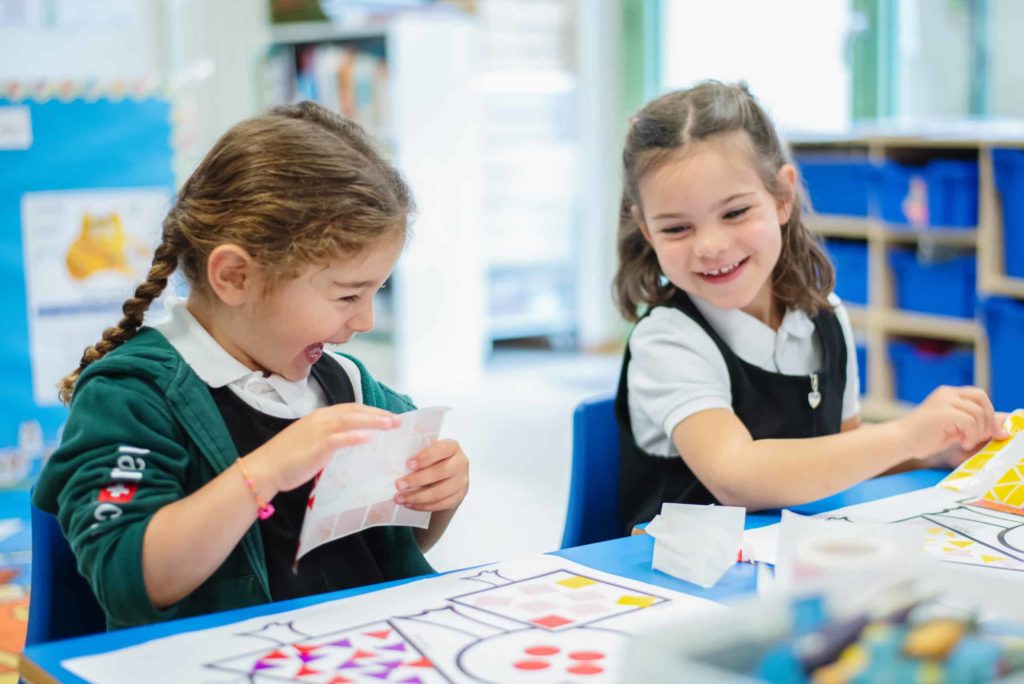
The Infant and Primary students in our bilingual section study in English and French on alternate days. They work two full days in English and two full days in French every week, and alternate the tuition language on Wednesday mornings every nine weeks to ensure they get equal access to all areas of the curriculum in both of the school’s working languages.
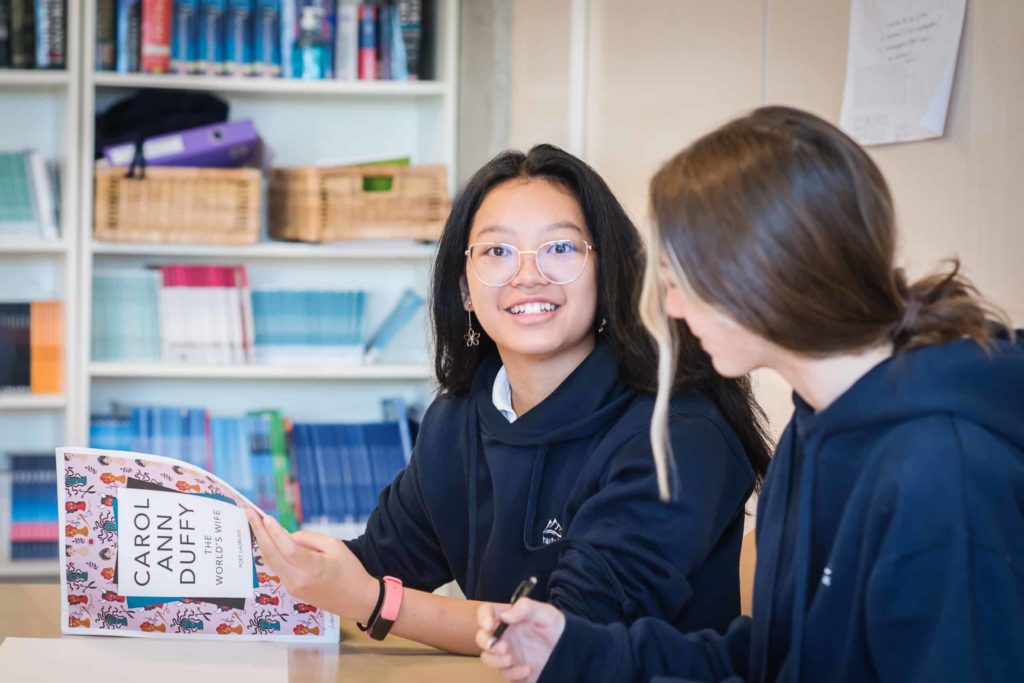
Secondary students in the bilingual section at Haut-Lac School may follow a fully bilingual pathway or a progressive bilingual pathway depending on their individual language skills.
The Preschool and Primary students in our bilingual section study in English and French on alternate days. They work two full days in English and two full days in French every week, and alternate the tuition language on Wednesday mornings every nine weeks to ensure they get equal access to all areas of the curriculum in both of the school’s working languages.
Secondary students in the bilingual section at Haut-Lac may follow a fully bilingual pathway or a progressive bilingual pathway depending on their individual language skills.

What’s true and what’s not about bilingual education?
Check out the Haut-Lac blog for updates on our approach to bilingualism and expert collaborations.

At Haut-Lac International Bilingual School, bilingualism means the ability to effectively communicate in two or more languages.
Rather than simply memorising vocabulary or rehearsing set phrases, students learn to apply their language skills confidently in any situation. Whilst they may use French and English at different proficiency levels, all students engage with both languages in their everyday lives at school.
Yes, Haut-Lac follows a structured bilingual model that ensures balanced exposure to both French and English.
In Infant and Primary (ages 3-12):
Students in the bilingual section work in English and French on alternating days (Mon, Tues, Thurs & Fri), and the Wednesday tuition language switches every 9 weeks to ensure equal access to all areas of the curriculum in both languages.
In Secondary (ages 13-18):
Students in the bilingual section study all traditional academic subjects in English and French until MYP3 (Grade 8), when they decide which to study in which language and stick to their choice until the end of MYP5.
IB1 & 2 students choose how many subjects to study in English and how many in French based on their learning needs and future goals.
All traditional academic subjects are taught in both French and English at Haut-Lac International Bilingual School.
Students in the bilingual section learn subjects like mathematics, science, humanities in both languages. ICT, sport and the arts are mainly taught in English, but the specialist teachers can provide support in French if necessary.
Students in the English stream focus primarily on one language for instruction but have daily lessons in the other language to maintain bilingual development.
Haut-Lac monitors language exposure school-wide, and provides professional development for staff to ensure language learning happens effectively across all classrooms.
The alternating schedule in Infant and Primary and the subject-split approach in Secondary ensure students can’t rely on just one language. Teachers also employ translanguaging strategies in the classroom, which enable students to draw on both languages to deepen understanding and has been shown to accelerate second language acquisition.
Students then mix with peers from different language backgrounds during breaks, after-school clubs and activities to encourage informal language practice.
Haut-Lac’s commitment to keeping pace with language research and development means teachers regularly update their practice based on the latest evidence in bilingual education.
All teachers receive ongoing professional development to support effective teaching in a bilingual environment.
Most of them are also native speakers of the language they teach in, which ensures students hear authentic pronunciation and natural language use. Beyond language fluency, staff are trained in bilingual pedagogy and translanguaging strategies to help students access content whilst developing their language skills.
Haut-Lac offers a distinctive approach to bilingualism that differs from traditional Swiss bilingual programmes.
Swiss state schools usually have one language of instruction and French, German, Italian and English as a foreign language lessons.
Haut-Lac, however, teaches all subjects in English and French, and ensures immersion in both languages outside the classroom. This deeper integration helps students become genuinely bilingual rather than simply learning a second language.
Yes, students can join the bilingual programme without being bilingual when they arrive.
Haut-Lac’s philosophy recognises that language learning is a long journey that differs for each student. Teachers therefore create safe environments, where students feel comfortable taking language risks and support is tailored to each one’s needs.
We provide language support through English as an Additional Language (EAL) and French as an Additional Language (FLA) specialist teachers. These teachers work alongside classroom teachers to develop Individual Language Support Plans to ensure students can access the curriculum whilst building their language skills.
Students in the English or French streams can also transition into the bilingual stream at any point once their language skills have developed sufficiently.
A bilingual school focuses specifically on instruction in two languages, whilst an international school emphasises a globally-minded curriculum and diverse student body.
Haut-Lac is both – it’s an international bilingual school. We combine bilingual education in French and English with the internationally-recognised IB curriculum and a community of students of over 60 nationalities.
Many international schools offer language classes but primarily teach in one language. At Haut-Lac, both French and English are languages of instruction throughout the curriculum, not just subjects to study.
This combination equips students to become global citizens, who are comfortable in multiple languages, culturally aware and have internationally-recognised qualifications.
The most important thing parents can do is communicate with their child in the language of their home.
Research shows that children thrive when they can communicate effectively in the language of their home, their school and their environment.
At school, we provide the structured exposure to both French and English. At home, focus on rich conversations, reading together and maintaining strong family connections in whichever language feels natural.
If you’re concerned about your child’s progress in either school language, speak with their teachers. The school can provide specific strategies and support tailored to your family’s situation.
Yes, Haut-Lac values and supports students’ mother tongue languages as powerful tools for learning.
Our language policy recognises that supporting mother tongue development helps increase the rate of second language acquisition. Students who maintain strong skills in their first language often learn additional languages more effectively.
We run mother tongue language clubs for various nationalities, which enable students to maintain and develop their home language alongside their French and English studies. The school also celebrates linguistic diversity through events that showcase the many languages spoken by the community.
This approach reflects the school’s belief that language learning should value the language and cultural background of all learners, not replace home languages with school languages.
It can. Swiss authorities recognise years of schooling in French at Haut-Lac as meeting the language requirement for naturalisation applications. So alongside a properly bilingual education, families settling in Switzerland long-term get a practical head start on citizenship too.