Our approach to student well-being is rooted in four core values that guide every interaction:
These words shape how we teach, how we support students, and how we work with families to guarantee each student’s emotional, social and physical well-being.


As a recognised Child Safeguarding School, we’ve built our community around one simple truth: when children feel genuinely valued and emotionally secure, they naturally become curious, confident learners.
Whether your child is 6 or 18, they’ll find teachers who truly see them, friends who celebrate their uniqueness, and opportunities to explore their passions in an environment where belonging is guaranteed.


Secondary students meet with their form tutor and lead tutor once a week to tackle the immediate pressures of school life alongside bigger questions involving health, relationships, nutrition, substance use and online safety. It’s all about equipping them with the resilience and judgment they need in and out of school.
The programme is strengthened by expert external speakers, whose specialist knowledge complements the ongoing guidance students receive from their tutors on topics like consent, personal safety and digital citizenship.
Our Personal, Social, Health and Economic Education curriculum weaves essential life skills into daily learning in our infant and primary sections. Children explore topics like healthy relationships, financial literacy, digital citizenship and personal responsibility through age-appropriate activities that spark meaningful conversations.
We nurture each child’s emotional intelligence alongside their intellectual growth to help them build resilience and self-awareness.
Infant and primary students often start the day with a moment’s calm designed to give them practical tools to manage stress, focus their attention and approach challenges with a clear mind. They learn breathing techniques, body awareness exercises and reflection practices they can use whenever they need to centre themselves.


Mandala Zen for mindfulness and creativity in preschool

Yoga sessions for flexibility and stress relief

Mind & Body sessions for overall personal harmony

Psychology club for secondary students who want a deeper understanding of human behaviour
School Counsellor Alessia brings warmth and expertise to every interaction with students. Whether a child needs help managing anxiety, navigating friendship challenges or simply wants someone to listen, Alessia provides a safe space where feelings are validated and solutions are explored together.

Strong friendships and meaningful connections form naturally when children feel they belong.
Our carefully designed programmes bring students together across year groups to create a school family that makes everyone feel valued.
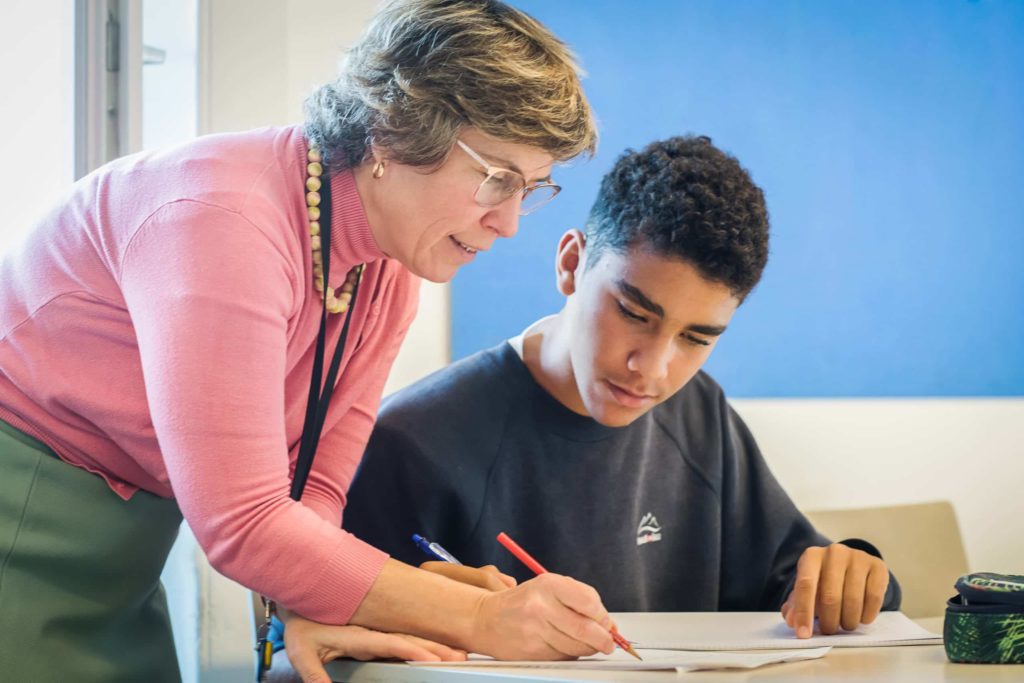
These partnerships pair existing students with new ones in relationships that benefit everyone involved. They help new students settle in quickly, enable existing ones to practice empathy in action, and give older children opportunities to develop their leadership skills.
Our active PTA creates opportunities for families to build friendships, support school initiatives and participate in the vibrant community that makes Haut-Lac feel like home.
Named after four bilingual regions in Switzerland, our Houses give every student an instant sense of belonging. From E1 to IB2, students challenge each other at sport, work together on charity initiatives, celebrate achievements and support one another.

Charity: School in Lapu, Nepal

Charity: World Bicycle Relief

Charity: Karin Dom

Charity: The Children’s Nutrition Program of Haiti
A new programme. Student achievement. Alumni success.
Here is where we share all the new and exciting things that happen at Haut-Lac.
Got a question?
Check out our FAQs to get an answer fast.
If you can’t find the information you need here, do reach out to our admissions team.

At Haut-Lac, emotional well-being means helping students develop the skills to understand and manage their emotions, build positive relationships and navigate challenges confidently.
We recognise that children need more than academic knowledge to thrive. Through our Personal, Social and Health Education (PSHE) programme, students learn to identify their feelings, develop healthy coping strategies and build resilience.
This approach helps students feel safe, supported and valued throughout their time at school.
Our school counsellor provides confidential support for students facing academic, social or emotional challenges.
Students can speak with the counsellor about concerns including friendship difficulties, family changes, stress management, self-confidence or any issues affecting their well-being. The counsellor works with students individually or in small groups to develop strategies and coping skills.
When appropriate, the counsellor collaborates with teachers, parents and external specialists to ensure students receive comprehensive support. All conversations remain confidential except where safeguarding concerns arise.
Yes, well-being is integrated throughout the school year through PSHE lessons, themed assemblies and special events.
The Haut-Lac International Day celebrates the school’s 64 nationalities through multicultural food, dance and activities, promoting social connection and cultural appreciation.
Students also participate in awareness initiatives through the Student Council and Environmental Committee, developing their sense of responsibility and contribution to the wider community.
The school balances traditional academic tools with technology to enhance learning outcomes.
Students use iPads (P3-MYP4), MacBooks (MYP5-IB2), interactive whiteboards and digital platforms for educational purposes during lessons. These tools support differentiated learning and develop essential digital literacy skills.
We also teach students about responsible and safe technology use through our Digital Citizenship programme.
Social integration happens naturally through our multilingual, multicultural environment and intentional programmes.
Students work in mixed gender groups for class projects, participate in House competitions across year levels and join clubs that bring together different ages and backgrounds. The bilingual structure means students regularly collaborate with peers from diverse linguistic and cultural backgrounds.
New students receive peer support through buddy programmes. The Student Council and school associations provide leadership opportunities that build connections across the school community.
The Haut-Lac International Day and other cultural celebrations ensure every student’s background is valued and shared.
Well-being education begins from age 3 and continues throughout a student’s time at Haut-Lac.
In Infant and Primary, children learn about emotions, friendships, keeping safe and healthy habits through age-appropriate activities and discussions.
In Secondary, the PSHE programme expands to cover topics including mental health, relationships, decision-making, personal identity and preparing for independent life. The content evolves with students’ developmental stages, ensuring they build skills progressively.
The school provides individualised support through specialist teachers and personalised learning plans.
Students developing English or French proficiency work with specialist EAL and FLA teachers who create Individual Language Support Plans. These ensure students can access the curriculum whilst building language skills at an appropriate pace.
Teachers are trained to recognise and accommodate different learning needs, working closely with parents and external specialists when additional support is beneficial. The school counsellor is also available for students requiring emotional or social support.
Students learn emotion regulation strategies through PSHE lessons and daily mindfulness practice.
The curriculum teaches children to identify their feelings, understand what triggers different emotions and develop healthy coping techniques. They learn that feeling disappointed, frightened or frustrated each requires different management strategies.
When conflicts arise, teachers guide students through resolution processes, helping them communicate effectively and find constructive solutions. The school counsellor provides additional support for students facing ongoing challenges.
Through small group work, individual counselling and classroom discussions, students build the skills to navigate difficult emotions confidently.
Students learn time management, organisation skills and study techniques appropriate to their age. Teachers also structure homework to reinforce learning without overwhelming students.
When exam pressure increases in high school, students receive specific guidance on revision planning, stress management and maintaining perspective. The school counsellor supports students experiencing heightened anxiety.
Most importantly, we foster a growth mindset culture where effort and progress matter more than perfection to help students approach challenges with resilience rather than fear.
The Haut-Lac school menus reflect nutritional guidelines appropriate for growing children and adolescents, and include options for different dietary requirements.
We limit the amount of sugar available on campus by providing the infant students with healthy morning and afternoon snacks, and encouraging primary parents to do the same with their children. All birthday treats brought from home to share with classmates must also be fruit-based rather than sugar and chocolate-based.
Students also learn about nutrition and physical health through sport and PSHE lessons. These help them understand how food, exercise, sleep and outdoor time affect their well-being, so that they can make informed choices about their health.